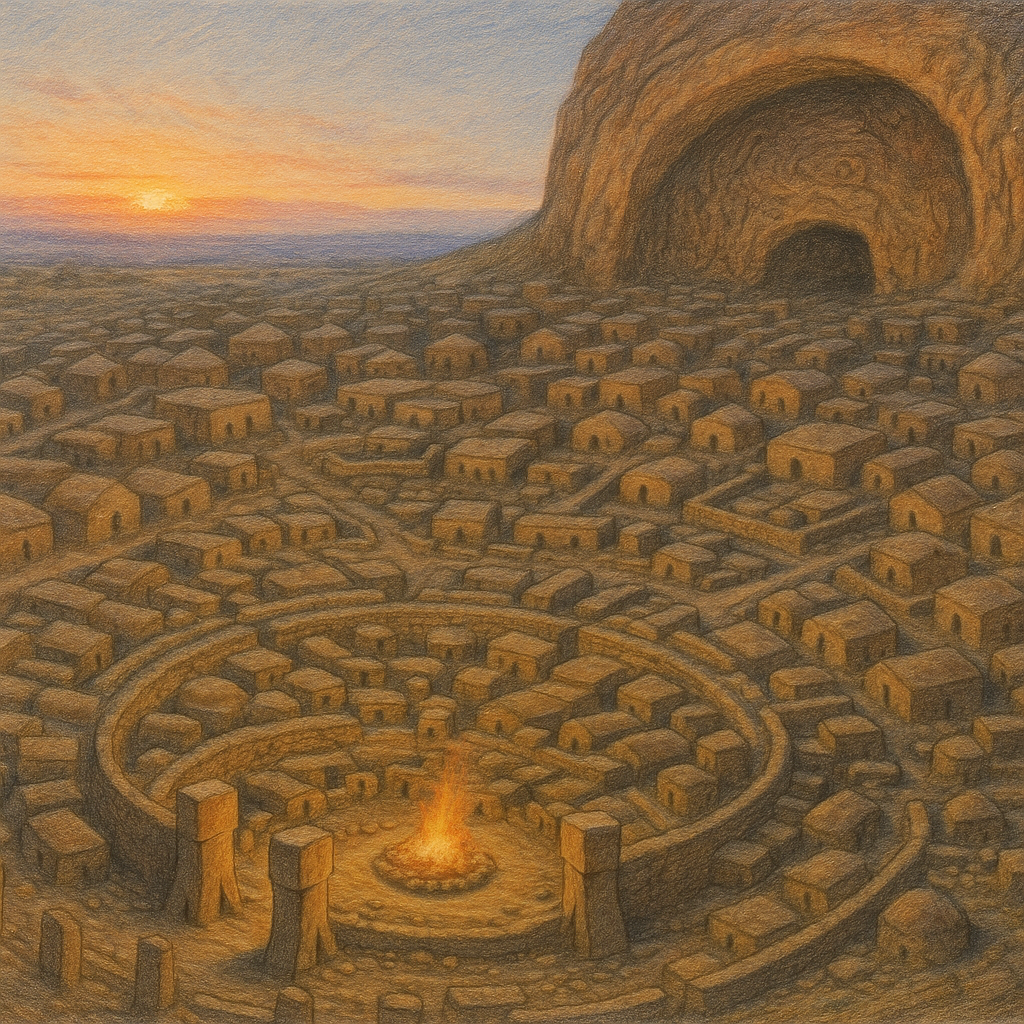

Mah Sakuwantar
The Great Rest
A mythic journey through the dawn of human consciousness, where stories were born in firelight and carved into stone.
A Spiral Tone Production
The Story
Mah Sakuwantar is a story about people—long before civilization—learning, slowly and imperfectly, how to live together.
There are no heroes chosen by fate, no hidden powers, no prophecy driving events forward. What unfolds instead is quieter: attention, care, mistakes, and the small decisions that shape shared life.
Each chapter tells a complete story. You don’t need to rush or keep track of anything. If Chapter One feels simple, that’s intentional—it’s meant to be entered gently.
This is a story that rewards patience, but it does not demand it. You are free to read at your own pace, take what lands, and leave the rest.
Chapters
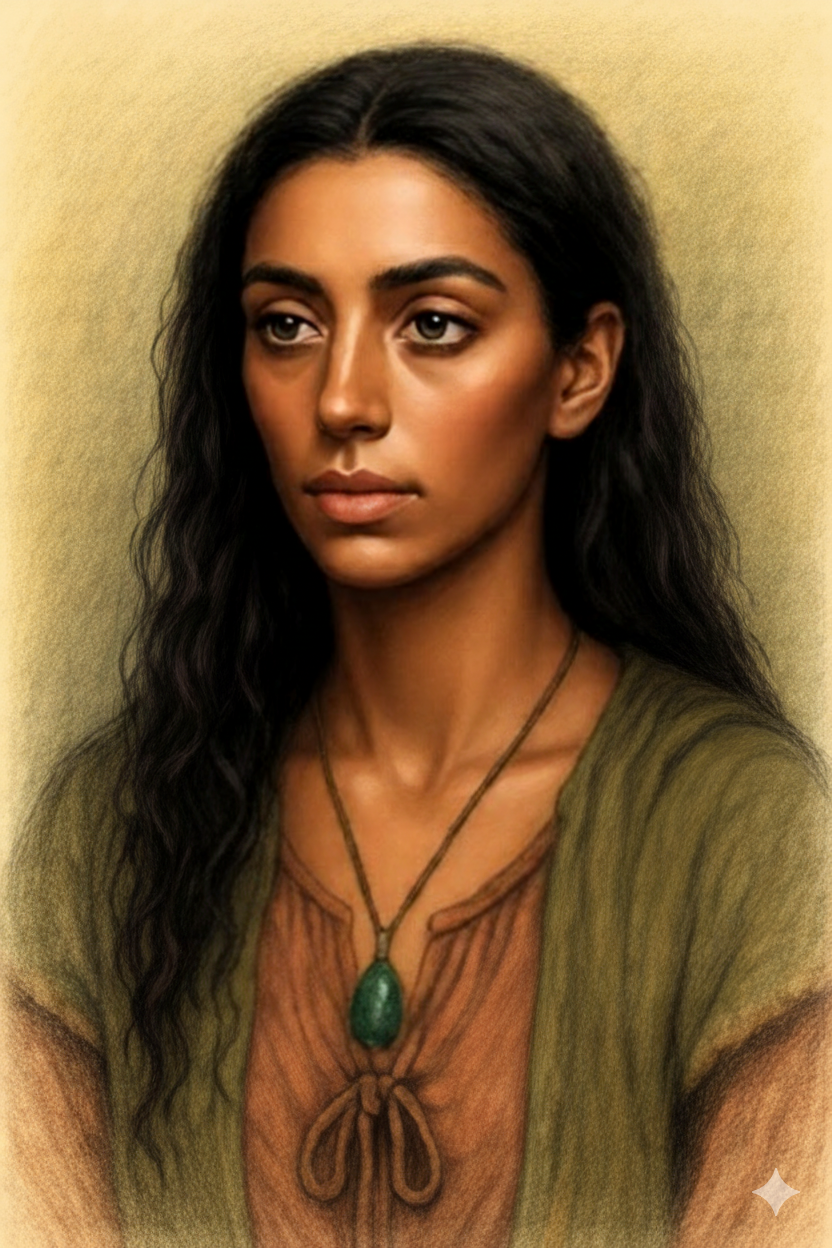
Chapter One
Pronunciation: Vay-nah
Innovation: Medicine, plant knowledge, vision states
Sacred Object: Moldavite pendant
At sixteen, Wenh witnessed a meteor fall and found moldavite—green glass from the stars. She learned medicine through mushroom tea visions, befriended a predator, and became the first pattern-seer validated at The Great Rest.
For seventy winters, she wore the moldavite pendant and carried the knowing grin of someone who sees what others miss, holding the "why" of the rituals so the tribe wouldn't drift into empty performance.
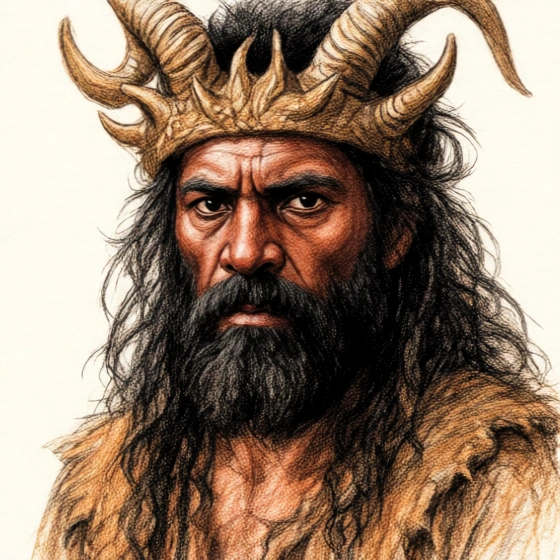
Chapter Two
Pronunciation: Vike-nose
Innovation: Animal domestication, interspecies understanding
Sacred Object: Goat-horn crown, shed horns
For fourteen winters, Weiknos learned to think like goats—to move like prey, to see like prey, to become something between human and animal. At twenty, he proposed the radical idea: don't hunt goats, let them choose to stay. The first domestication. He wore a goat-horn crown and spent seventy winters walking with the herds, speaking their language better than human speech, turning raw fear into a shared pattern that bridged wild animal and settled people.

Chapter Three
Pronunciation: Yay-moh-toes
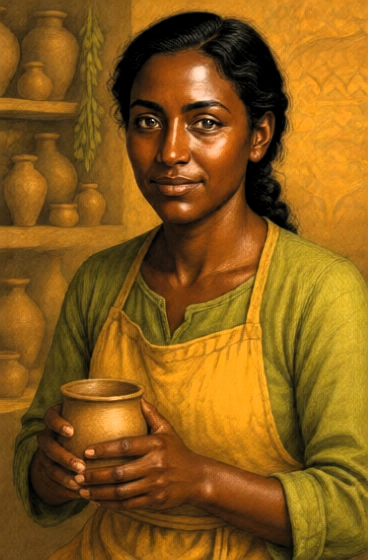
Innovation: Vessel synthesis, craft integration
Sacred Object: Etching tool, ash urn
Yemotos combined basket-weaving with pottery—a forbidden synthesis that threatened guild power. They removed his teeth as punishment. He responded with laughter—not madness, but armor. The laugh that said "they can't un-make what's been made." He outlived his entire people, carried his daughter's ashes for twenty-four winters, and returned to tell the story backward: from death to life, ending with beauty, proving that binding crafts together quietly reorders how people can feed, store, and trade.

Chapter Four
Pronunciation: Say-rahp-nay-nah
Innovation: Pattern-drift detection, meaning preservation
Sacred Object: Torch (for clear seeing)
At fourteen, Serapnenh arrived at The Great Rest with no objects, only questions. "Why?" "What is this FOR?" Her unblinking gaze made adults uncomfortable because she saw when signal separated from tone, when people performed rituals without understanding them. She became Wenh's apprentice and spent fifty-six winters asking the questions that keep meaning and practice stitched together so forms don't drift loose from the patterns they were meant to serve.
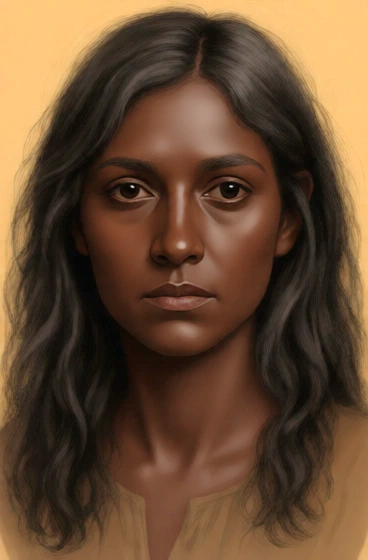
Chapter Five
Pronunciation: Ah-lay-nah
Innovation: Exchange protocol, gift-trade synthesis
Sacred Object: Uranium ore pendant (beauty and danger)
At eight, Alenh watched diplomacy fail and violence follow. At eighteen, she created the shell bead protocol: "You may keep these beads for their beauty, or exchange them at The Great Rest for goods that your tribe needs." Beads as both gift and exchange—enabling trade while preserving relationship. Standing where generosity and obligation meet, she saw the danger immediately: what happens when people begin to love the markers of value more than the ties they were meant to honor?

Chapter Six
Pronunciation: Bayn-boob
Innovation: Sanitation, infrastructure, water management
Sacred Object: Trowel (tool of the invisible kingdom)
At fifteen, Benbhub discovered underground water was carrying sewage into wells. Nobody believed him—they mocked him as "Lord of the Flies." He spent winters mapping the invisible kingdom: waste flows, water tables, fly patterns. He created the Benbhuben profession and proved infrastructure matters more than monuments. "Someone must rule where no one wants to look. Down is where survival lives."

Chapter Seven
Pronunciation: Gain-tor
Innovation: Dye-making, spirit-walk consciousness, shared vision
Sacred Objects: Mortar and pestle (vision and method)
Sebenh saw colors hidden in plants. Malkhos documented every attempt. Together, they learned to enter the "spirit-walk"—a third consciousness that emerged between them. They moved like water finding its level, worked in wordless synchronization, and brought yellow, blue, and purple into the world. The Great Rest exploded with color as they showed how beauty could be coaxed from plants and stone, and how a shared state of mind could make the invisible suddenly visible.

Chapter Eight
Pronunciation: Rayn-ek-hoes & Tone-ek-hoes
Innovation: Organized watch system, fire prevention, security
Sacred Objects: Twin whistles (carved from one branch)
Twin brothers who never needed words between them. At seven, trapped by snow, they learned rhythm could transcend isolation. At twelve, they saw the River People's watch system and knew: we could do this. They created rotating watches, hand signals, alert calls. The fire-watch system that protected The Great Rest. Two minds functioning as one system, two halves of shared awareness who turned simple vigilance into a way of holding the whole settlement in mind at once.
Chapter Nine
Pronunciation: Tray-ay-nah
Innovation: Fermentation, food preservation, strategic medicine
Sacred Object: Tap (controlled flow, measured release)
Threyenh apprenticed with Wenh but couldn't bear the constant resistance—healing as battle. At nineteen, she found another way: hide medicine in pleasure. Mead laced with pain relief. Fermented foods that preserved health. People eagerly drank what they'd refused as tincture. "I don't want to fight every time I help someone." Her craft turned kitchens into quiet clinics, feeding bodies and shifting moods while teaching that generosity can move where authority is blocked.
Chapter Ten
Pronunciation: Hayn-mows
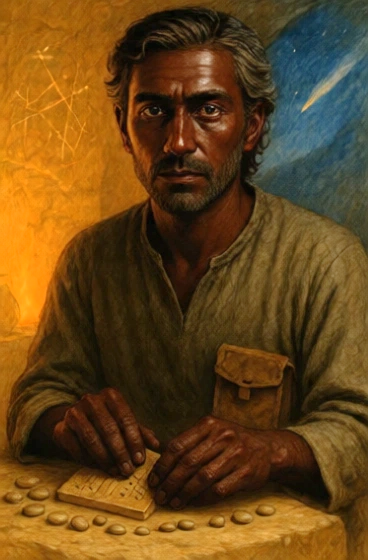
Innovation: Written counting, mathematical systems, shared knowledge
Sacred Object: Abacus (external memory)
At thirteen, Henmos could calculate faster than anyone. He was proud—until a merchant asked "who else knows what you know?" Knowledge trapped in one mind dies with that person. He learned humility from the stars—patterns too vast for memory alone. He created counting tablets, taught others his systems, made knowledge shareable. "The most important knowledge isn't what you can hold in your head—it's what you can share with others." His marks turned invisible quantities and timings into something the whole community could think with together.
Yemotos returns, laughing as he approaches the cave. Carrying what remains...
Read ChapterThe fire burns for three days. The pattern-keepers gather one final time...
Read ChapterDownload
Take the story with you. Download the complete book as a PDF, free to read and share from spiraltone.com.